Court Marriage Procedure and Documentation in 2026
Court Marriage Procedure and Documentation in 2026
Entering into a marriage is a life-altering decision that requires both emotional readiness and legal diligence. In the modern context of Pakistan, particularly for those residing in metropolitan hubs, the traditional wedding is often supplemented or replaced by a formal legal process. Understanding this is essential for couples who want to ensure their relationship is protected by the state’s judicial umbrella. This guide explores the procedural nuances, from the initial affidavit to the final registration.
The Legal Landscape of Civil Contracts
In Pakistan, the Nikah is recognized as a civil contract. Unlike some jurisdictions where a religious ceremony and a civil ceremony are entirely separate, the Pakistani legal system integrates the two. When a couple opts for a court marriage, they are essentially performing their Nikah under the direct supervision of the legal system. This ensures that the contract is witnessed, recorded, and attested by a judicial officer, leaving no room for future legal ambiguity.
Eligibility Criteria: Staying Within the Law
Before the process begins, the parties must meet the statutory requirements.
- Age: Under the current provincial laws, particularly in Sindh, the minimum age is 18 for both the bride and the groom.
- Consent: Free will is the cornerstone of the contract. Any marriage performed under duress is voidable in the eyes of the law.
- Marital Status: If either party was previously married, they must provide legal proof of the dissolution of that marriage (Divorce Certificate or Death Certificate of the former spouse).
Step-by-Step Procedure for Court Marriage
The journey toward a legally recognized union follows a specific set of steps designed to verify the identities and intentions of the couple.
1. Preparation of Legal Affidavits
The process starts with the drafting of affidavits. These documents, usually prepared by a legal professional, state that the individuals are of legal age, are marrying of their own free will, and have no legal impediments to their union. These must be attested by an Oath Commissioner.
2. The Role of the Nikah Khawan
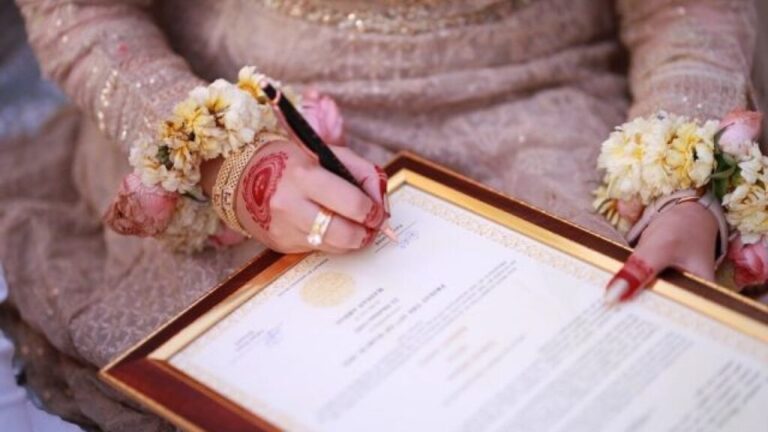
A licensed Nikah Khawan is summoned to perform the religious ceremony. Even in a court setting, the religious protocols are strictly followed. The proposal and acceptance (Ijab-o-Qubool) are made in the presence of two adult witnesses. The Nikah Nama is filled out, detailing the Mahr (dower) and any specific conditions the bride wishes to include.
3. Appearing Before the Magistrate
For a , the couple must appear before a Magistrate. The Magistrate’s primary role is to verify the bride’s consent. This is a protective measure that prevents “forced marriages.” The bride’s statement is recorded under Section 164 of the CrPC, providing a permanent judicial record of her voluntary participation.
4. Witness Documentation
The two witnesses play a crucial role. They must provide copies of their valid CNICs and sign the Nikah Nama. Their presence is a legal necessity for the validity of the Nikah under both Sharia and Pakistani civil law.
The Importance of the Union Council
Once the court proceedings are concluded, the manual Nikah Nama must be submitted to the local Union Council. This is the administrative body responsible for maintaining marriage and birth records. The Secretary of the Union Council registers the marriage in the government ledger, which is the prerequisite for obtaining the computerized certificate.
Why Professional Legal Support is Vital
While the procedure might seem straightforward, the bureaucracy of the courts can be complex. Issues such as improper wording in affidavits or the use of an unlicensed Nikah Khawan can lead to the marriage being legally contested later. Engaging with professionals ensures that:
- All documents meet the latest 2026 legal standards.
- The registration with the Union Council is handled without delays.
- The couple receives protection from any harassment or false legal claims from third parties.
Final Thoughts
The transition toward court-supervised marriages reflects a growing trend of legal empowerment among Pakistani youth. By following the established procedure, couples can ensure that their union is not just a social event, but a legally fortified bond that stands the test of time and law.